

led mirror bedroom
Understanding the Snap Gauge A Precision Tool in Measurement In the world of manufacturing and engineering, precision is key. One instrument that plays a critical role in achieving that precision is the snap gauge. Though not as widely recognized as calipers or micrometers, snap gauges offer unique advantages, particularly when it comes to measuring external dimensions quickly and efficiently. This article aims to delve into the functionality, types, and applications of snap gauges and why they are indispensable in various industries. What is a Snap Gauge? A snap gauge is a type of limit gauge designed to check the external dimensions of a workpiece. It typically consists of two fixed measuring surfaces and an adjustable surface that can be snapped into place against the workpiece. The primary purpose of a snap gauge is to provide a go/no-go measurement, meaning it checks if a part is within specified dimensional limits without providing a precise measurement of the dimension itself. The simplicity of the design is one of its significant advantages. Operators can quickly determine whether a part meets the required specifications, which enhances productivity. Snap gauges can be made from various materials, including steel, carbide, and plastic, depending on the application's requirements. Types of Snap Gauges Snap gauges come in various forms, each tailored to specific measuring needs. The two primary types are 1. Go/No-Go Snap Gauges This is the most common type, where the gauge has two separate interfaces — one for the 'go' measurement and one for the 'no-go' measurement. If a part fits within the 'go' gauge but does not fit within the 'no-go' gauge, it is deemed acceptable . This type is favored in high-volume manufacturing settings where speed and simplicity are of the essence. snap gauge 2. Variable Snap Gauges Unlike the go/no-go design, these gauges have adjustable measuring sections. They can be set to various dimensions, making them more versatile for varying specifications. Variable snap gauges are often used in situations where more than one dimension needs to be checked or where parts have varying size requirements. Applications of Snap Gauges Snap gauges find use in a multitude of industries - Automotive Manufacturing Used extensively in quality control to ensure that parts like pistons, cylinders, and other engine components meet the necessary tolerances. - Aerospace Industry Critical for measuring components where precision is non-negotiable and can impact safety and performance. - Machining and Fabrication Often used on the shop floor for quick checks of work-in-progress parts, helping to maintain tight tolerances throughout the manufacturing process. - Quality Assurance An essential tool in any QA department where rapid assessments of parts are required to keep production lines moving without delays. Advantages of Using Snap Gauges The benefits of snap gauges are numerous - Speed and Efficiency The primary advantage is the rapid measurement capability, allowing for swift quality checks without the need for extensive set-up time or complicated procedures. - Simplicity Snap gauges are easy to use. Even operators with minimal training can effectively use snap gauges, which reduces the potential for measurement errors. - Cost-effectiveness Generally, snap gauges are less expensive than other precision measuring instruments, making them an economical choice for manufacturers, especially those working with tight budgets. Conclusion In conclusion, while snap gauges may not be household names in the realm of measuring tools, their impact on the manufacturing and engineering sectors cannot be understated. Their ability to provide quick, reliable measurements makes them indispensable for quality assurance and efficiency on the production floor. As industries continue to emphasize precision and speed, the role of snap gauges will likely only increase, offering a robust solution to maintain the rigorous standards demanded by modern manufacturing processes. Investing in a quality snap gauge can pay dividends in both time savings and product quality, underscoring its value as a fundamental tool for engineers and manufacturers alike.
about
led mirror bedroom
Understanding Pilot Operated Check Valves Key Components in Hydraulic Control Systems In the realm of hydraulic systems, the functionality and reliability of components play a crucial role in maintaining system efficiency and safety. Among these components, pilot operated check valves stand out as sophisticated regulatory devices that offer enhanced control over fluid flow. This article delves into the intricate workings, applications, and benefits of pilot operated check valves, underscoring their significance in modern hydraulic machinery. **Introduction to Check Valves** Fundamentally, a check valve is a unidirectional valve that permits fluid flow in one direction while preventing backflow, ensuring process continuity and protecting system components from damage due to unintended pressure reversals. Simple check valves operate based on differential pressure, opening when the upstream pressure exceeds a certain threshold and closing automatically when this pressure drops or reverses. **Pilot Operated Check Valve An Overview** A step above conventional check valves, the pilot operated check valve (POCV) employs an additional level of control through a pilot mechanism. Unlike standard check valves that rely solely on fluid pressure for operation, POCVs use a separate, low-pressure signal (the pilot pressure) to control the main valve's opening and closing. This design introduces a higher degree of regulation and responsiveness, making them particularly valuable in complex hydraulic circuits. **Operating Principle** The heart of a POCV lies in its dual-chamber design. The primary valve body, akin to a traditional check valve, consists of a spring-loaded poppet that seals against a seat to halt reverse flow. However, this poppet is controlled not directly by the main line pressure but by a smaller, secondary valve – the pilot valve. The pilot valve responds to a separate, low-pressure signal, which when activated, relieves pressure behind the poppet, allowing it to open under the influence of the upstream pressure. This setup enables the POCV to remain closed even under high differential pressures until the pilot signal commands otherwise, providing precise control over the fluid's directional flow. Conversely, when the pilot pressure is relieved, the spring forces the poppet to seal, effectively halting any potential backflow Conversely, when the pilot pressure is relieved, the spring forces the poppet to seal, effectively halting any potential backflow Conversely, when the pilot pressure is relieved, the spring forces the poppet to seal, effectively halting any potential backflow Conversely, when the pilot pressure is relieved, the spring forces the poppet to seal, effectively halting any potential backflow pilot operated check valve . **Key Benefits and Applications** The precision control offered by POCVs makes them indispensable in several hydraulic applications 1. **Accumulator Isolation** In systems with accumulators, POCVs prevent pressurized fluid from flowing back into the pump during operation, ensuring efficient energy usage and system protection. 2. **Pressure Holding Circuits** They are used to maintain pressure in specific parts of a circuit, even when the main pump is deactivated, facilitating functions like brake locking or tool holding in machinery. 3. **Overload Protection** By integrating POCVs with relief valves, they can provide an additional layer of safety against excessive pressure spikes, safeguarding sensitive equipment. 4. **Cylinder Control** In hydraulic cylinders requiring precise motion control, POCVs can regulate the extension and retraction sequences, enhancing operational smoothness and accuracy. **Conclusion** Pilot operated check valves exemplify the integration of advanced technology into hydraulic systems, offering a blend of responsiveness, control, and safety. Their ability to precisely manage fluid flow based on external signals elevates their utility beyond conventional check valves, making them a preferred choice in numerous industrial and mobile hydraulic applications. Understanding the principles and benefits of POCVs is essential for engineers and technicians aiming to optimize system performance and reliability. As hydraulic systems continue to evolve, the strategic implementation of components like POCVs will play a pivotal role in achieving higher levels of efficiency and control.
-

High quality industrial productsagement

High quality industrial products
View Details -

Meet the diverse needs of customers

Meet the diverse needs of customers
View Details -

Strict quality control

Strict quality control
View Details -

Top raw materials

Top raw materials
View Details -

Trusted supplier

Trusted supplier
View Details
Our application
news and information
Y Type Strainer Valve for Efficient Fluid Filtration and Flow Control Solutions
Understanding Y-Type Strainer Valves A Comprehensive Overview In the realm of fluid mechanics and pi

Valvola a ghigliottina 3 4 - Valvole di alta qualità per applicazioni industriali
Titolo La Valvola a Fune del 3% e del 4% Un Approfondimento sulle Valvole più Utilizzate . Ma cosa r
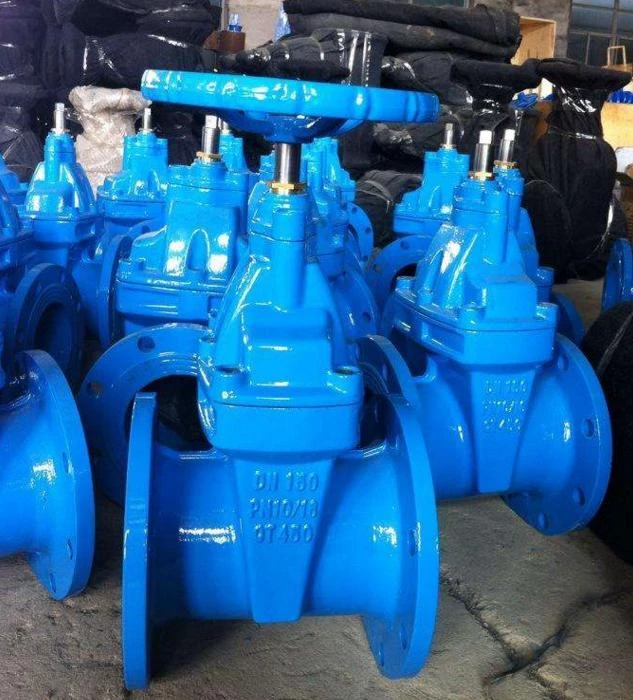
vysoce kvalitní vodové hladiny
Vysoce kvalitní nivelace Klíč k dokonalosti v každé stavbě Když se zamýšlíme nad stavbou nebo jakýmk
 English